9 min read
American chewing gum began in 1850, when John B. Curtis and his father cooked up a batch of Maine spruce gum in a Bangor storefront, and its brands have been dying ever since. Some were outsold by their own siblings, some were merged away, and in 2022 Ferrara quietly stopped making gum altogether. These are 13 discontinued gum brands.
LIST OF DISCONTINUED GUM BRANDS
These are the 13 discontinued gum brands, in the order they arrived, with how each one ended.
| Gum | Introduced | How it ended |
|---|---|---|
| State of Maine Pure Spruce Gum | 1850 | Outsold by chicle gum |
| Adams New York Gum | Early 1870s | Replaced by flavored gums |
| Yucatan | 1880s | Merged into American Chicle |
| Kis-Me | 1886 | No record |
| Lotta and Vassar | 1892 | Outsold by Spearmint |
| Blibber-Blubber | 1906 | Too sticky to sell |
| Super Bubble | 1946 | Production stopped 2022 |
| Fruit Stripe | 1960 | Production stopped 2022 |
| Freshen Up | 1975 | Gone by about 2019 |
| Gatorgum | 1970s | Contract expired 1989 |
| Care*Free | No record | No longer on Hershey’s list |
| Chiclets | No record | U.S. sales stopped 2016 |
| Stride | 2006 | Dropped about 2019 |
An earlier version of this list included Bubblicious Cotton Candy, Extra’s Rockin’ Raspberry Lime and Trident Xtra Care. Bubblicious is still sold, and the Extra and Trident flavors have their own pages: discontinued Extra flavors and discontinued Trident flavors. Freshen Up, Chiclets and Stride take their places.
STATE OF MAINE PURE SPRUCE GUM
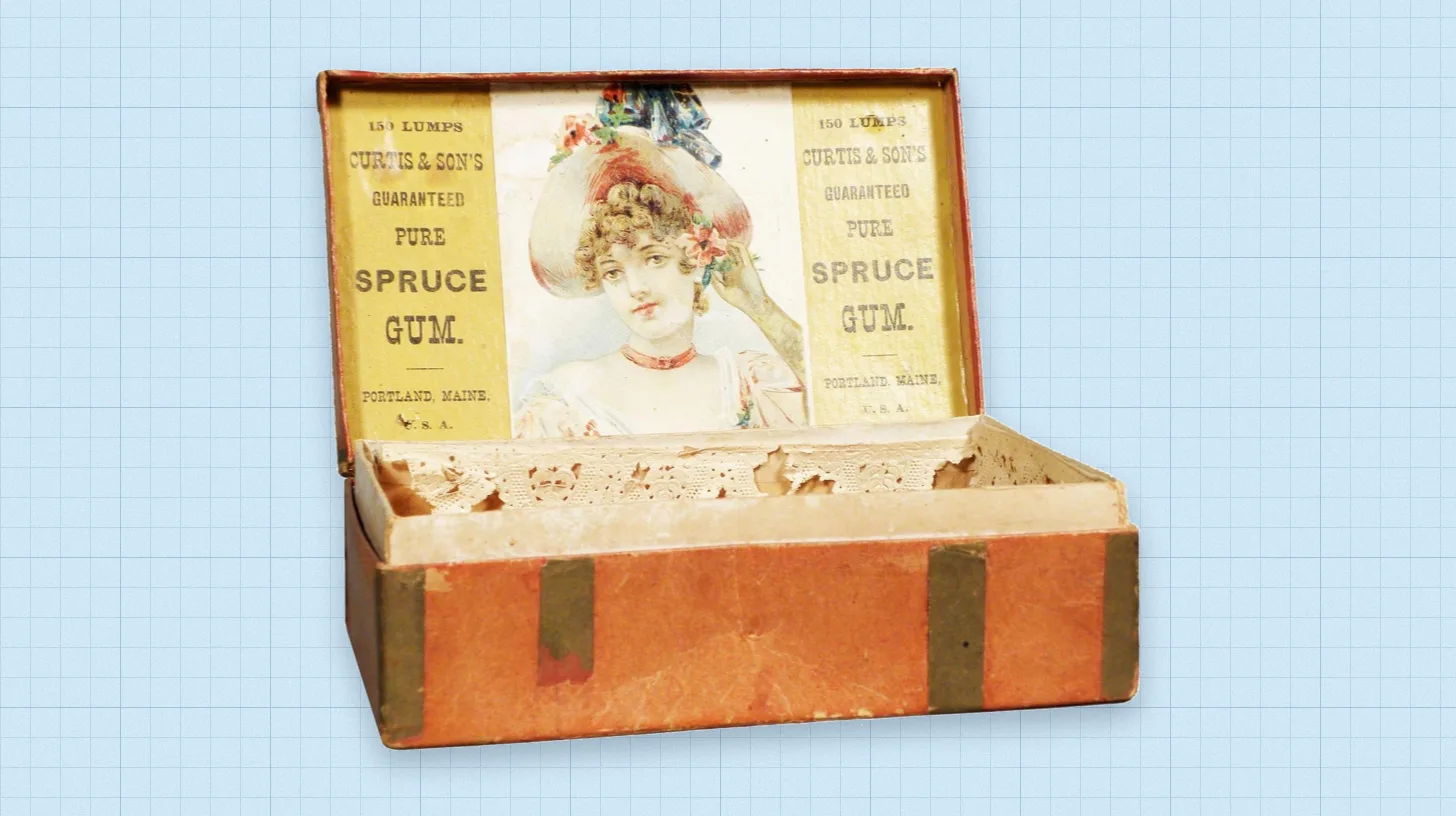
Discontinued: Faded by the 1890s
State of Maine Pure Spruce Gum was the first chewing gum sold in America. John B. Curtis learned to chew spruce resin as a 21-year-old woods worker in 1848, a habit the Wabanaki had taught lumbermen, and in 1850 he and his father cooked their first batch over a stove in a Bangor storefront. The Curtis story has its own page.
Spruce gum did not fail. Between 1850 and 1870 Curtis made a fortune on it, and in 1858 he moved to a factory in Portland. What beat it was chicle gum. By the 1890s Maine spruce gum was a niche product again, chewed mostly by people with ties to the lumber camps.
ADAMS NEW YORK GUM
Discontinued: No record gives a date
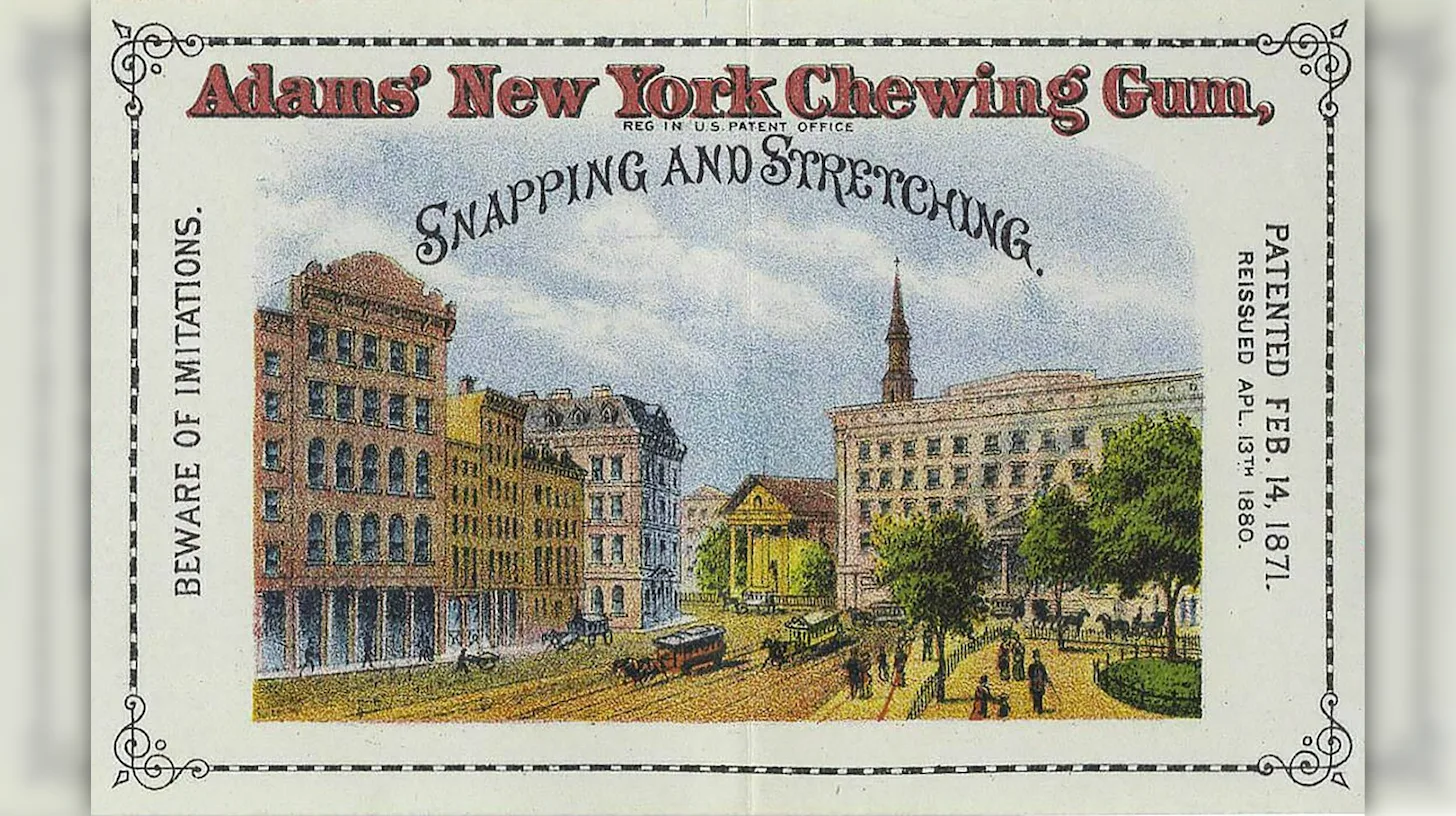
Adams New York Gum was the first chicle gum, and it started as a failed rubber plan. Antonio López de Santa Anna, the exiled Mexican general, was living on Staten Island and wanted a rubber substitute to pay for his return to power. He and Thomas Adams tried for months to vulcanize chicle like rubber. “It simply didn’t work,” the historian Jennifer Mathews told NPR.
Santa Anna went back to Mexico penniless and left Adams with the chicle. Adams turned it into gum, patented the process in 1871 according to his box labels, and sold it as Adams New York Snapping and Stretching Gum. The plain gum later gave way to flavored ones such as Black Jack, made with licorice.
YUCATAN
Discontinued: No record gives a date
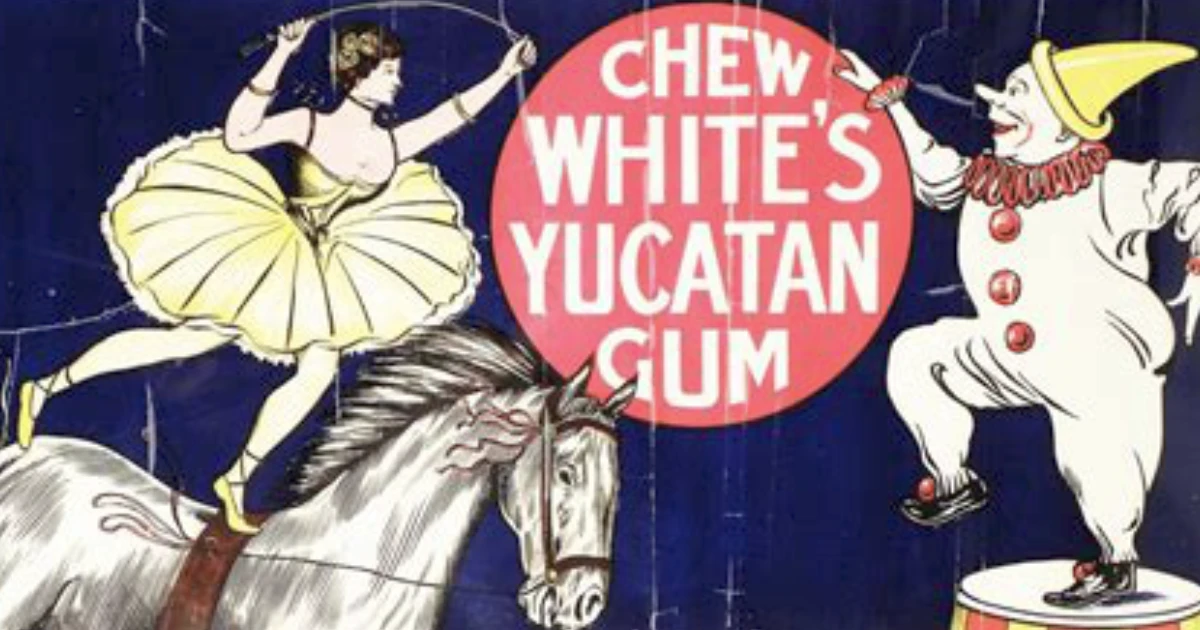
Yucatan began with a mistake. William J. White, who ran a candy store in Cleveland, bought a barrel of Yucatan chicle by mistake in 1884, found it could be softened and chewed, added mint and sold it as Yucatan.
By 1899 W. J. White & Son was the largest chewing-gum business in the world. Around 1900 White joined other gum makers, including Beeman of pepsin gum, to form the $10 million American Chicle Co. The gum king did not stay rich: around 1916 he was penniless and removed as American Chicle’s president.
KIS-ME
Discontinued: No record gives a date
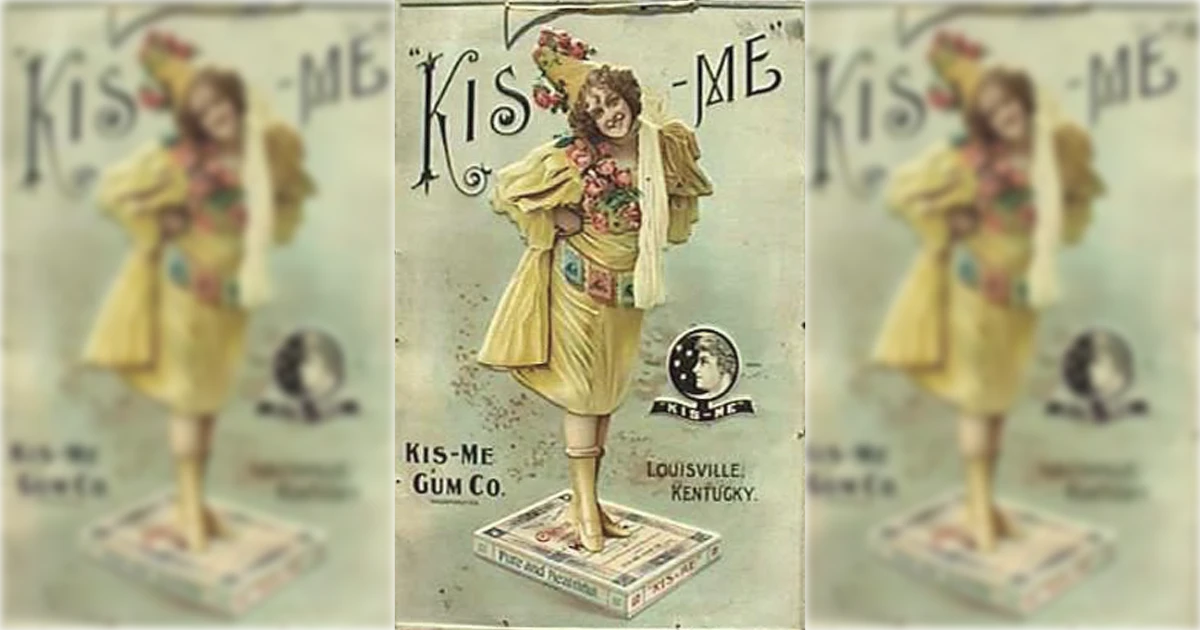
Kis-Me was a Louisville gum made from 1886 by a company headed by Jonathan Primley, in flavors such as wintergreen, peppermint tolu, orange and pepsin. Its trade cards played on the name, with pull-tabs that showed a kissing couple.
No record gives the year Kis-Me ended. An older version of this page said Primley invented the first fruit-flavored gum. No source supports that.
LOTTA AND VASSAR
Discontinued: 1890s
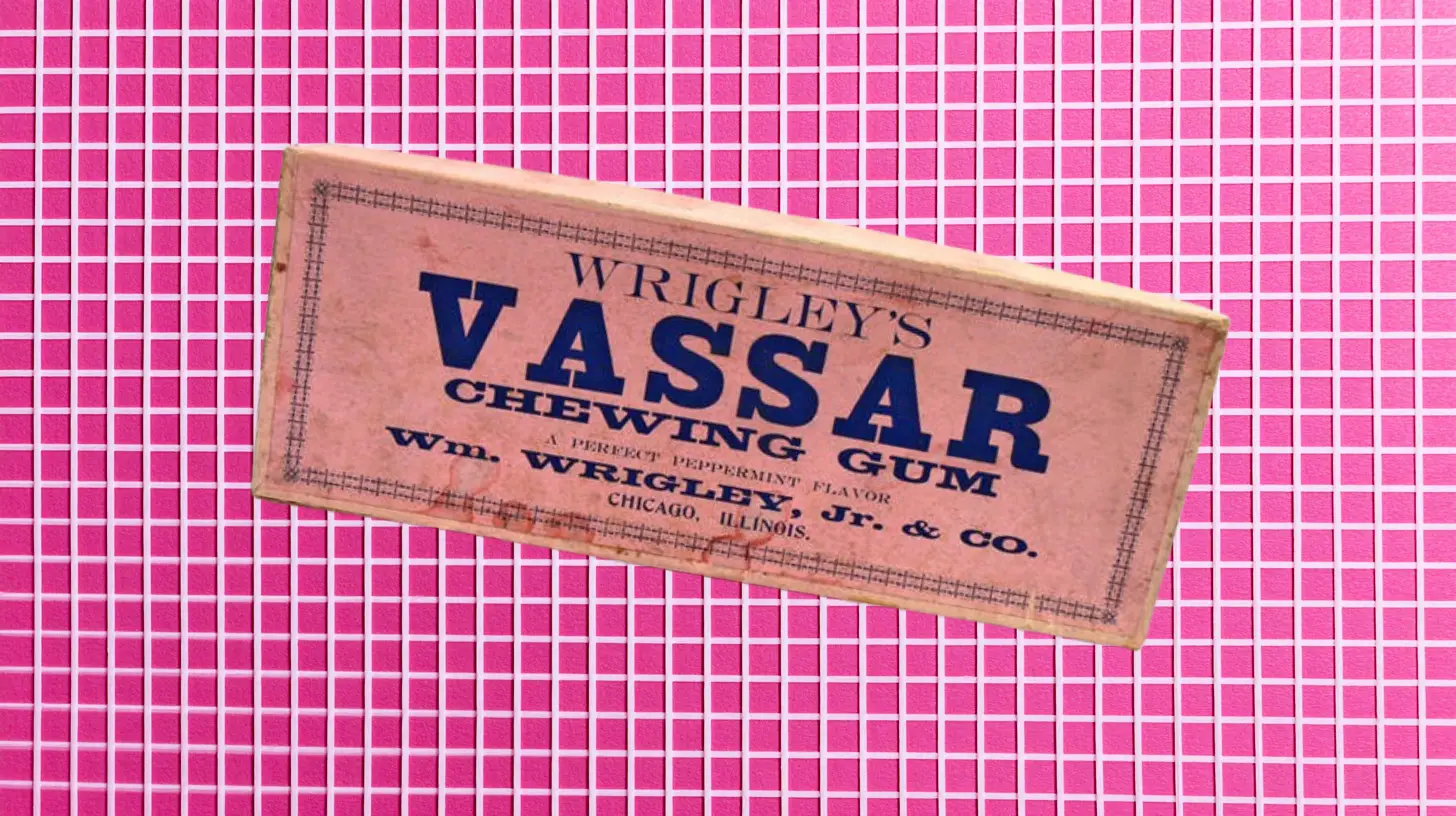
Lotta and Vassar were Wrigley’s first gum brands. William Wrigley Jr. had been giving gum away as a free premium with his baking powder, and when the gum proved more popular, he began selling it under his own name in 1892. Vassar was aimed at women, Lotta at everyone else.
Wrigley’s next gums ended them. Spearmint and Juicy Fruit, both from 1893, “proved so popular that Wrigley soon found no reason to continue manufacturing Vassar or Lotta gum.” The rest of Wrigley’s story has its own page.
BLIBBER-BLUBBER
Discontinued: Never sold widely
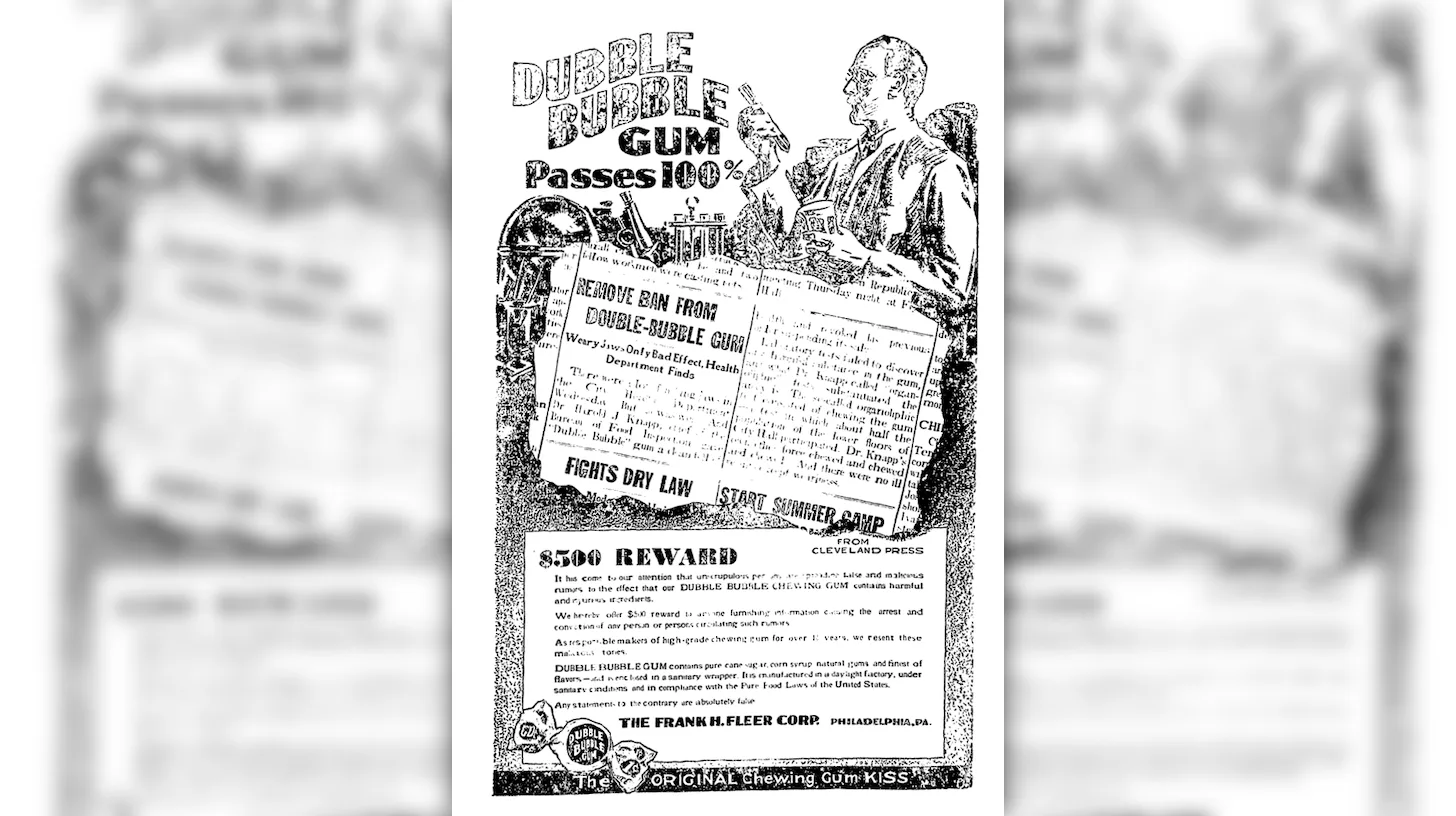
Blibber-Blubber was Frank Fleer’s first bubble gum. He patented an early version in 1906, but it did not stick, in part because the gum itself “was too sticky and brittle.” The full Blibber-Blubber story is on its own page.
Fleer’s bubble gum finally worked in 1928, when Walter Diemer, a 23-year-old accountant at the company, hit on a formula and dyed it pink because it came out gray. It became Dubble Bubble. Diemer did not expect it to last. “I never thought it was anything that’d last,” he told the AP’s Ted Anthony. “I thought it’d be here today, gone tomorrow.”
SUPER BUBBLE
Discontinued: 2022
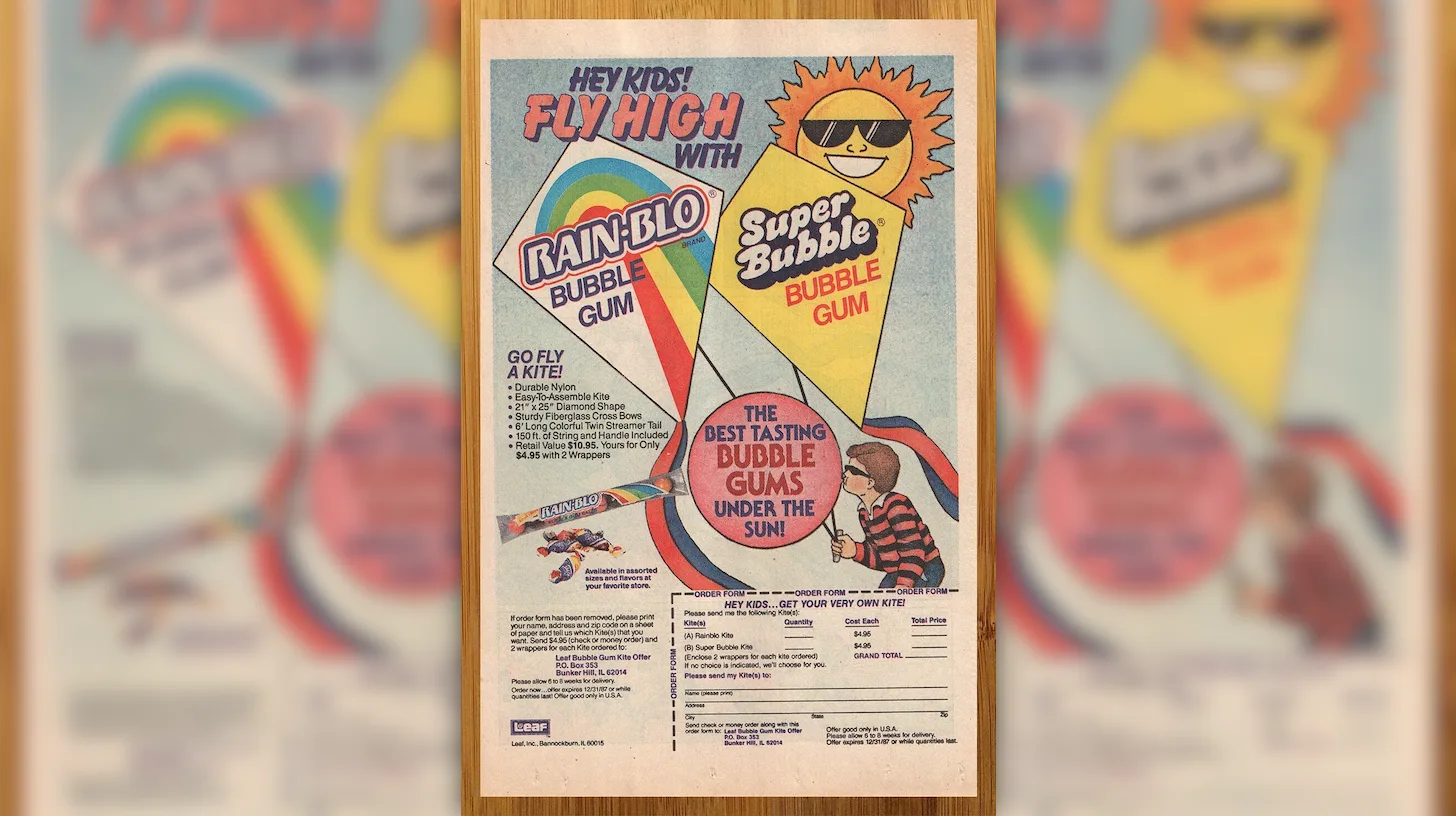
Super Bubble was a post-World War II bubble gum, introduced in 1946 as the first individually wrapped bubble gum under the name Bub’s Daddy. It ended up with Ferrara, the candy company.
Ferrara stopped making Super Bubble in 2022 and “no longer produces any chewing gums,” a spokesperson told CBS. “We have made the difficult decision to sunset Fruit Stripe Gum and Super Bubble,” said Brian Camen, a Ferrara spokesman. Some stores and Ferrara’s own online shop page still list Super Bubble, but that is leftover stock, not a comeback.
FRUIT STRIPE
Discontinued: 2022
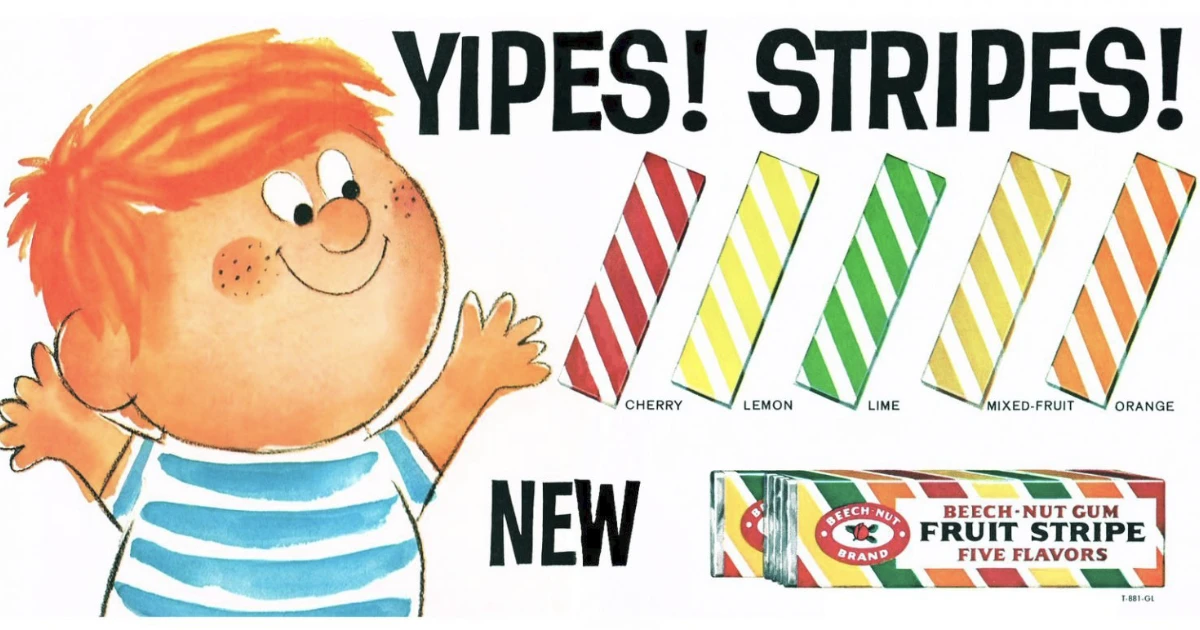
Fruit Stripe was striped fruit gum, invented in 1960 by James Parker and sold by Beech-Nut for five cents a pack. It came in five flavors and every stick held a temporary tattoo of the zebra mascot, who did not get his name, Yipes, until the 1990s. Its commercials promised a flavor that “starts lively and stays lively”; most chewers said it faded fast.
Ferrara stopped making Fruit Stripe in 2022 along with Super Bubble and announced the end in January 2024. The twist: in late 2021 Ferrara had boasted that Fruit Stripe sales were up 4.5 percent in a year.
FRESHEN UP
Discontinued: About 2019
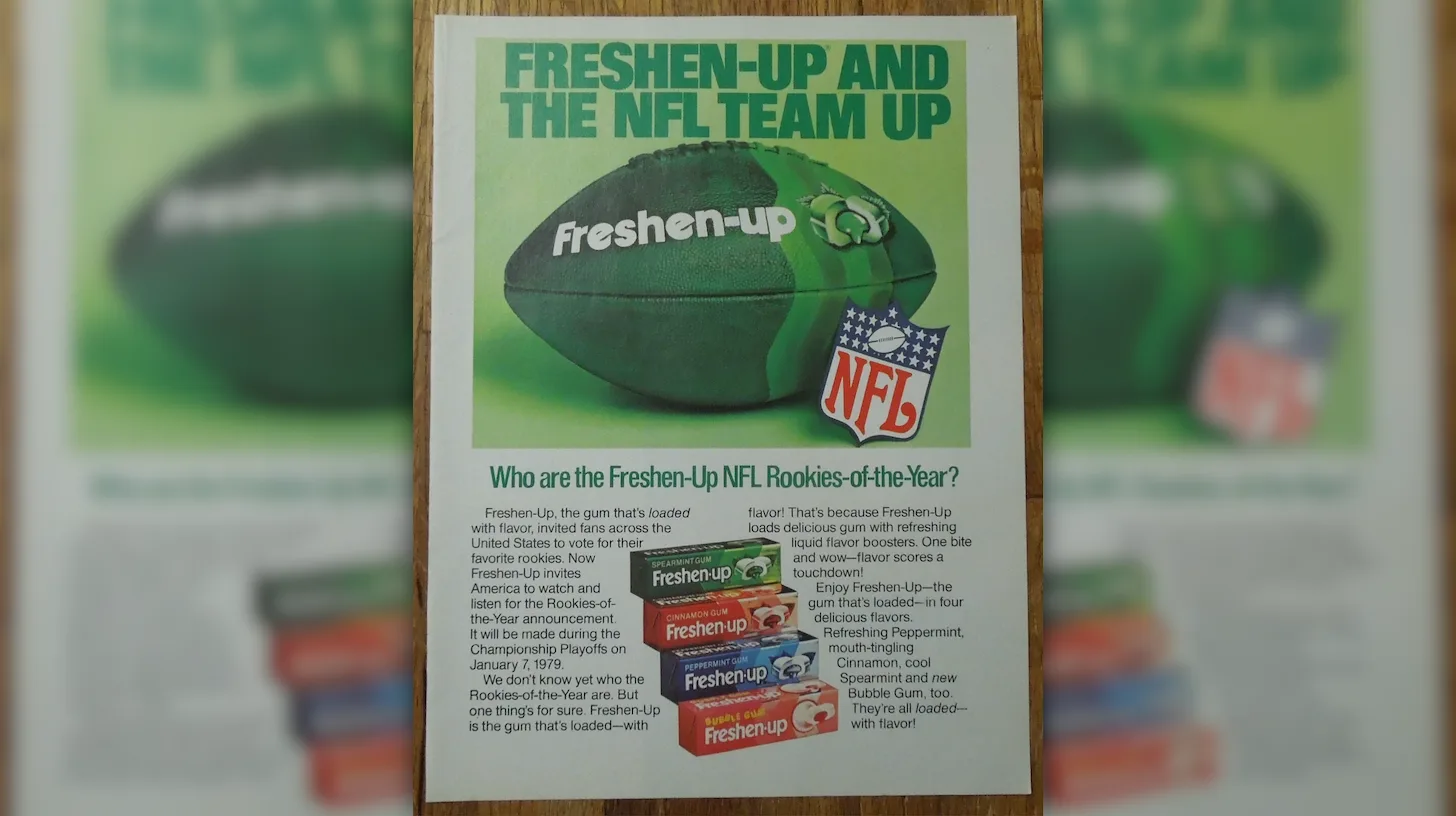
Freshen Up was a gum launched in 1975 by American Chicle. Its later maker, Cadbury Adams, made it in Brazil and shipped it to the United States until 2019, a snack-history site reports.
Its maker had a disaster the next year. On November 21, 1976, an explosion and fire at American Chicle’s gum factory in Long Island City, Queens, killed six workers and injured at least 50.
GATORGUM
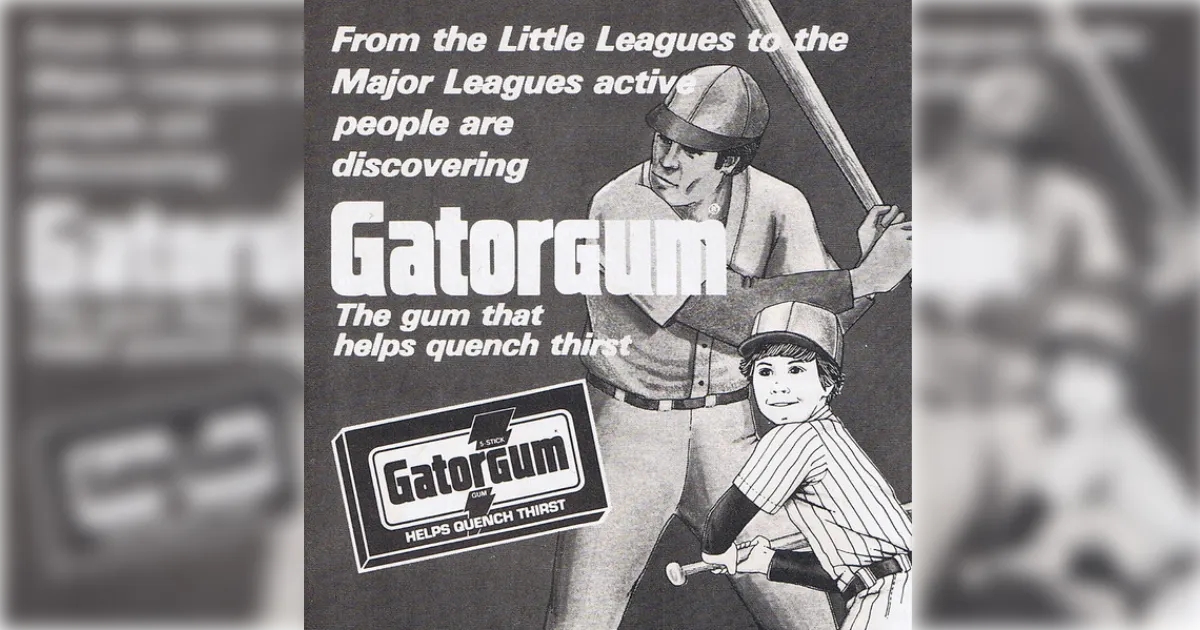
Discontinued: 1989
Gatorgum was Gatorade’s gum, in orange and lemon-lime, the only two flavors ever made. Its ads sold it as a gum that helps quench thirst.
Fleer made Gatorgum under license, and the gum ended when the contract between Fleer and Gatorade expired in 1989, not in the 2000s as an older version of this page said.
CARE*FREE
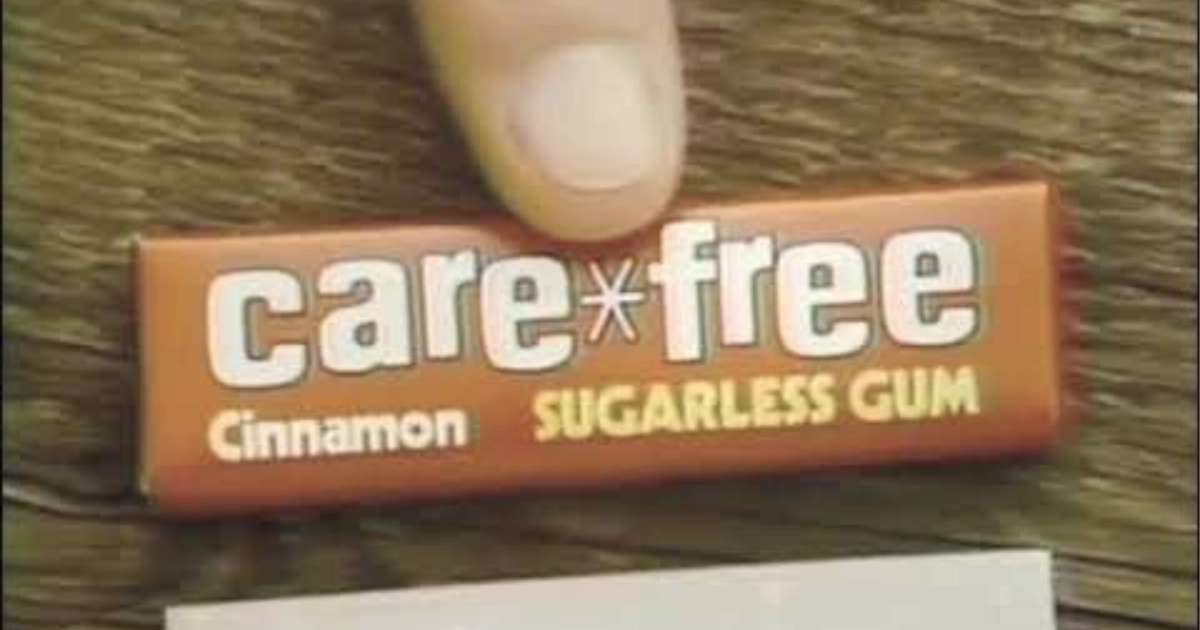
Discontinued: No record gives a date
CareFree was a sugarless gum from Life Savers. A 1990 ad for the spearmint pack promised that the flavor lasts. In 2000 Hershey paid $135 million for Nabisco’s mint and gum lines, including CareFree, Bubble Yum and Fruit Stripe.
Care*Free is not on Hershey’s own list of brands today, though Bubble Yum and Ice Breakers are. Hershey never announced when it stopped.
CHICLETS
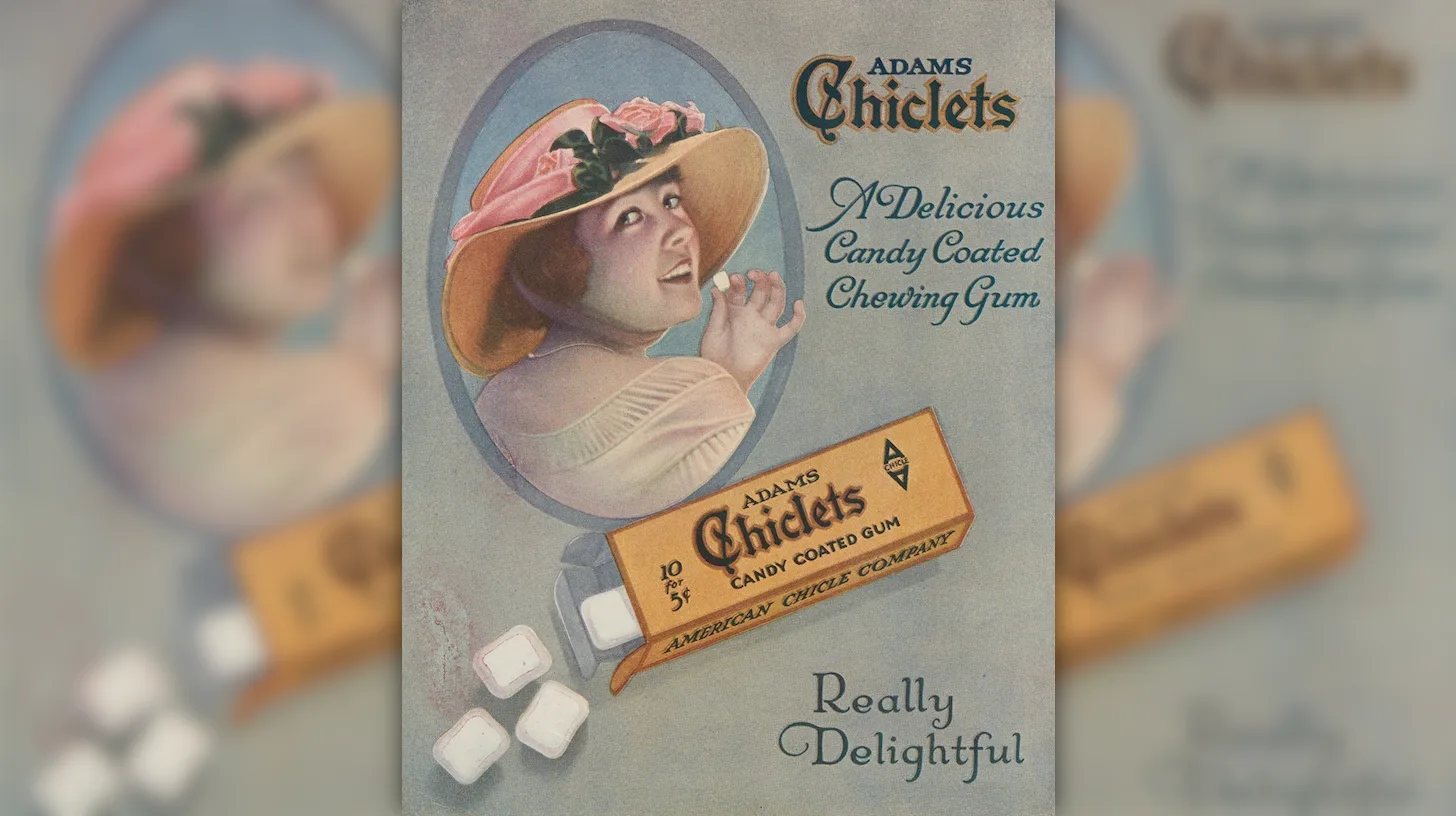
Discontinued: 2016 (United States)
Chiclets were small candy-coated pieces of gum, sold under the Adams name by the early 1900s. Mondelez, the last big owner, sold Chiclets in the United States until 2016, when its own records called it a “dying brand.”
A company called Retrobrands then tried to take the Chiclets name, arguing Mondelez had abandoned it. In 2020 the trademark board refused. Mondelez later sold Chiclets, Trident and its other gums in the United States, Canada and Europe to Perfetti Van Melle. The full Chiclets story has its own page.
STRIDE
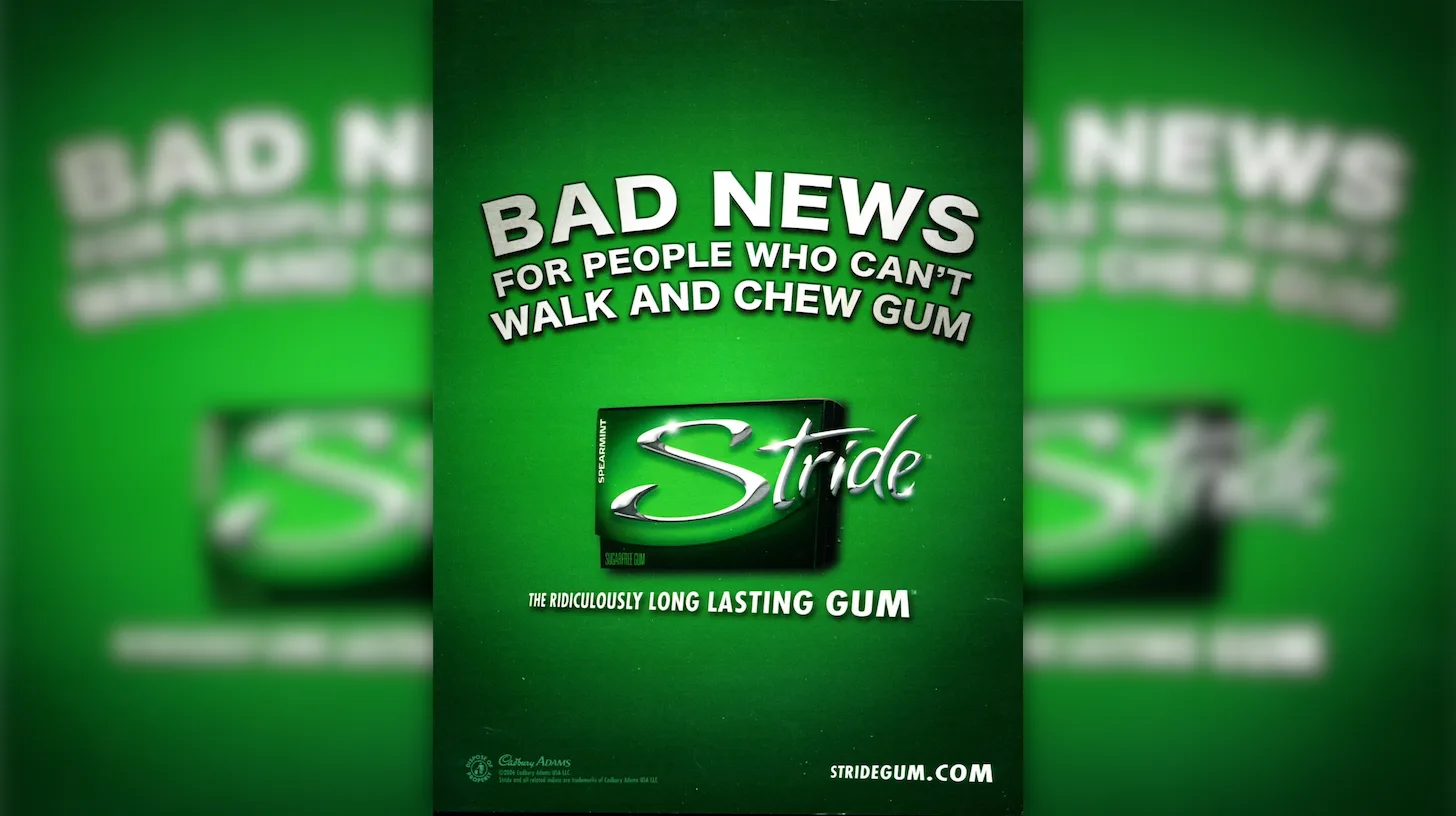
Discontinued: About 2019
Stride launched in 2006 as “the ridiculously long-lasting gum,” made by Cadbury Adams. Its ads joked about people who couldn’t walk and chew gum.
Stride’s owner, Mondelez, stopped selling it in the United States, Canada and Europe to focus on chocolate and baked goods. It never announced the end; Stride seems to have gone around 2019. Gum itself has been fading: Americans’ gum sales fell by one-third after 2018.
FAQ
What gum was recently discontinued?
The best-known recent gum discontinuations are Fruit Stripe and Super Bubble, which Ferrara stopped making in 2022 and announced in January 2024; Ferrara now makes no gum at all. Stride ended around 2019, Freshen Up by about 2019, and Chiclets were last sold in the United States in 2016.
Did they stop making Chiclets?
Chiclets are no longer sold in the United States. Mondelez stopped U.S. sales in 2016, calling Chiclets a “dying brand” in its own records, though it kept the trademark and won a 2020 fight over the name. Mondelez later sold Chiclets with its other gums to Perfetti Van Melle.
Can I still get Fruit Stripe gum?
Fruit Stripe gum is no longer made. Ferrara stopped production in 2022 and said in January 2024 it had decided to “sunset” Fruit Stripe and Super Bubble. Packs that still turn up online are leftover stock. Fruit Stripe had been sold since 1960, first by Beech-Nut.
Is Care*Free gum discontinued?
CareFree gum appears to be discontinued. Hershey bought the sugarless gum from Nabisco in 2000, along with Bubble Yum and Fruit Stripe, but CareFree is no longer on Hershey’s list of brands. Hershey has never announced an end date, and no record gives one.
What is the oldest chewing gum?
The oldest commercial chewing gum in America is Maine spruce gum. John B. Curtis and his father cooked their first batch in a Bangor storefront in 1850, using spruce resin that the Wabanaki had long chewed. Chicle gum, starting with Thomas Adams in the early 1870s, later replaced it.